Guide
Quantifying the Revenue Impact of Climate-Driven Downtime
A guide for private equity, credit and real asset teams
The financial impact due to disruption from extreme weather can often be many times greater than the direct damage costs. This guide explains how to identify exposure, quantify potential risk and bring the analysis into real workflows across diligence, financing and exit preparation.
By clicking 'Download', you agree that Climate X may use your information to contact you about our services or related events.
With insights from KPMG and Macquarie
- How extreme weather disrupts businesses through indirect channels
- How to quantify climate-driven financial impact
- How investment teams can manage and mitigate climate risk through a 5-step risk management framework
- How to integrate physical risk data into investment strategy, diligence and capital planning
- How Climate X supports risk management with data-driven climate risk analytics
- Teams assessing operational risk in diligence and value creation
- Credit and underwriting teams evaluating covenant headroom and default risk
- Infrastructure investors evaluating exposure to availability and reliability risk
- Real estate investment teams managing NOI and occupancy exposure
- Sustainability and ESG teams building a defensible evidence base for ICs and LPs
Understanding operational risk
How Extreme Weather Disrupts Businesses
Direct asset damage is only part of the risk that businesses face due to extreme weather. Operational disruption, including blocked access routes, supplier failure and workforce inaccessibility, often produces a larger financial impact than physical damage alone.
People
Employees can't access sites, heat cuts productivity and absenteeism rises.
Example impact: lower output, higher labor and cooling costs.
Access & logistics
Roads, rail, ports or distribution routes close and freight is delayed.
Example impact: lost sales, higher logistics costs.
Utilities
Power, water, telecoms or cooling systems fail.
Example impact: production downtime, spoilage, equipment damage.
Assets & operations
Buildings, machinery or inventory are damaged or unavailable.
Example impact: repair costs, downtime, higher resilience CapEx.
Suppliers & commodities
Critical inputs are delayed or unavailable and single-source suppliers fail.
Example impact: higher COGS, substitution costs.
Customers & contracts
Customers can't be served and SLAs or contractual obligations are missed.
Example impact: lost revenue, customer churn.
Risk mitigation
A 5 Step Framework For Value Protection
Whether you're underwriting equity, extending credit, or managing an infrastructure concession, understanding where operational disruption could be material protects value: EBITDA, covenant headroom, or asset availability.
Identify the Exposure
Map the full operating footprint of an entity.
Assess Materiality
Understand hazard severity, criticality, business tolerance and existing resilience controls to separate real exposure from noise.
Translate into Financial Impact
Quantify potential disruption days and translate into numbers you can act on.
Prioritize Action
Rank resilience measures by materiality, cost and expected avoided loss, so CapEx goes where it protects the most value.
Evidence Progress
Keep a record of exposure, disruption estimates and resilience actions taken, the evidence ICs, insurers, lenders and LPs expect.

Building resilience
Integrating Operational Disruption Analysis
The aim is to move from climate exposure as a screening datapoint to operational disruption as an investment variable that informs diligence, value creation, financing and exit.
Early screening
Screen for hidden value risk early without slowing deal flow, and get visibility into whether climate risk is likely to be material over the hold period.
Investment case
Move climate risk from ESG diligence into the investment case by translating exposure into downtime, EBITDA and NOI sensitivity
Debt & insurance
Price risk into debt, insurance and downside scenarios, and support better conversations with lenders and insurers
Hold & exit
Turn one-off diligence into an ongoing value-protection work flow over the hold period, supporting operating-partner action plans, resilience CapEx prioritization, IC updates and exit readiness
Reliable risk data every team can understand
One platform, from asset mapping to financial risk and resilience ROI
Climate X provides a practical route from risk identification to value protection and upside potential. For PE and asset manageent teams, operational business disruption analysis is moving into a standing part of diligence and credit decisions, rather than a separate ESG exercise.
Carta
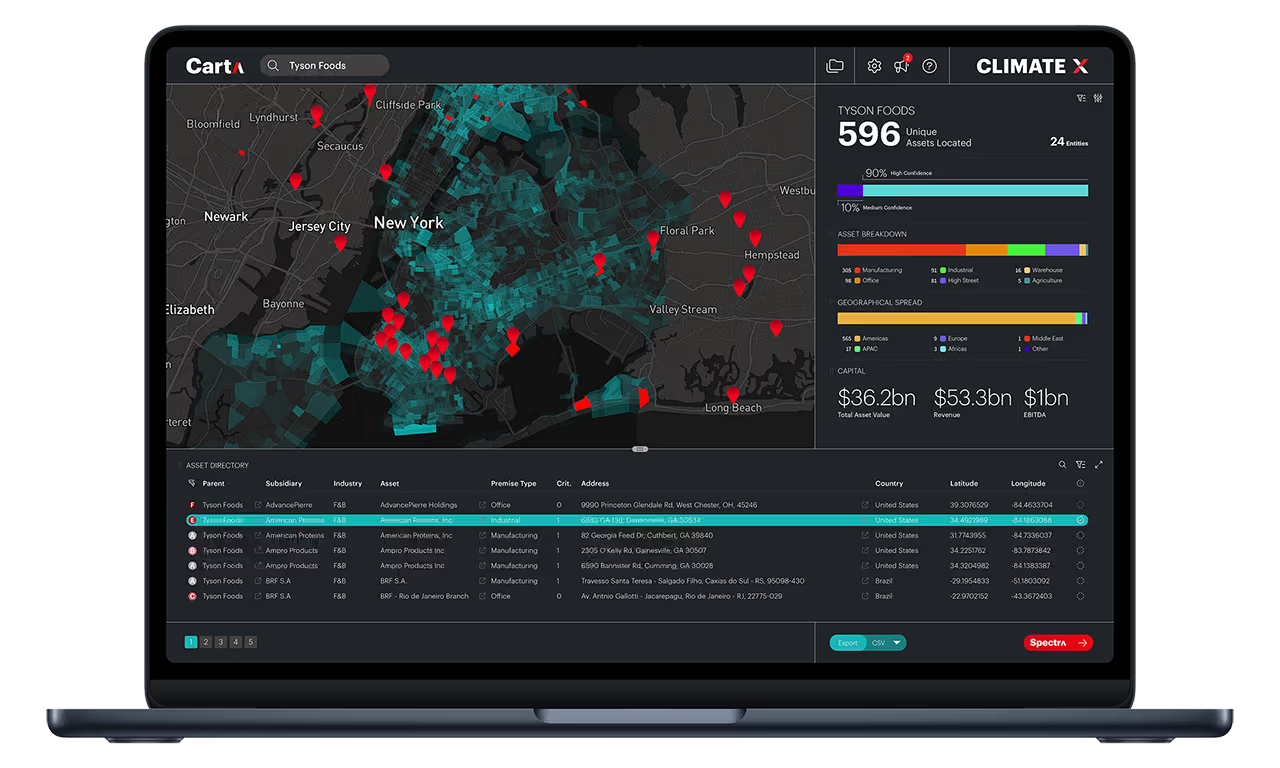
Carta maps a company's physical operating footprint, converting entity names and known locations into a structured, geocoded asset inventory, drawing on a database of 2bn+ assets across ~20m public and private companies. For PE teams, this eliminates location blind spots before materiality is even assessed.
Spectra
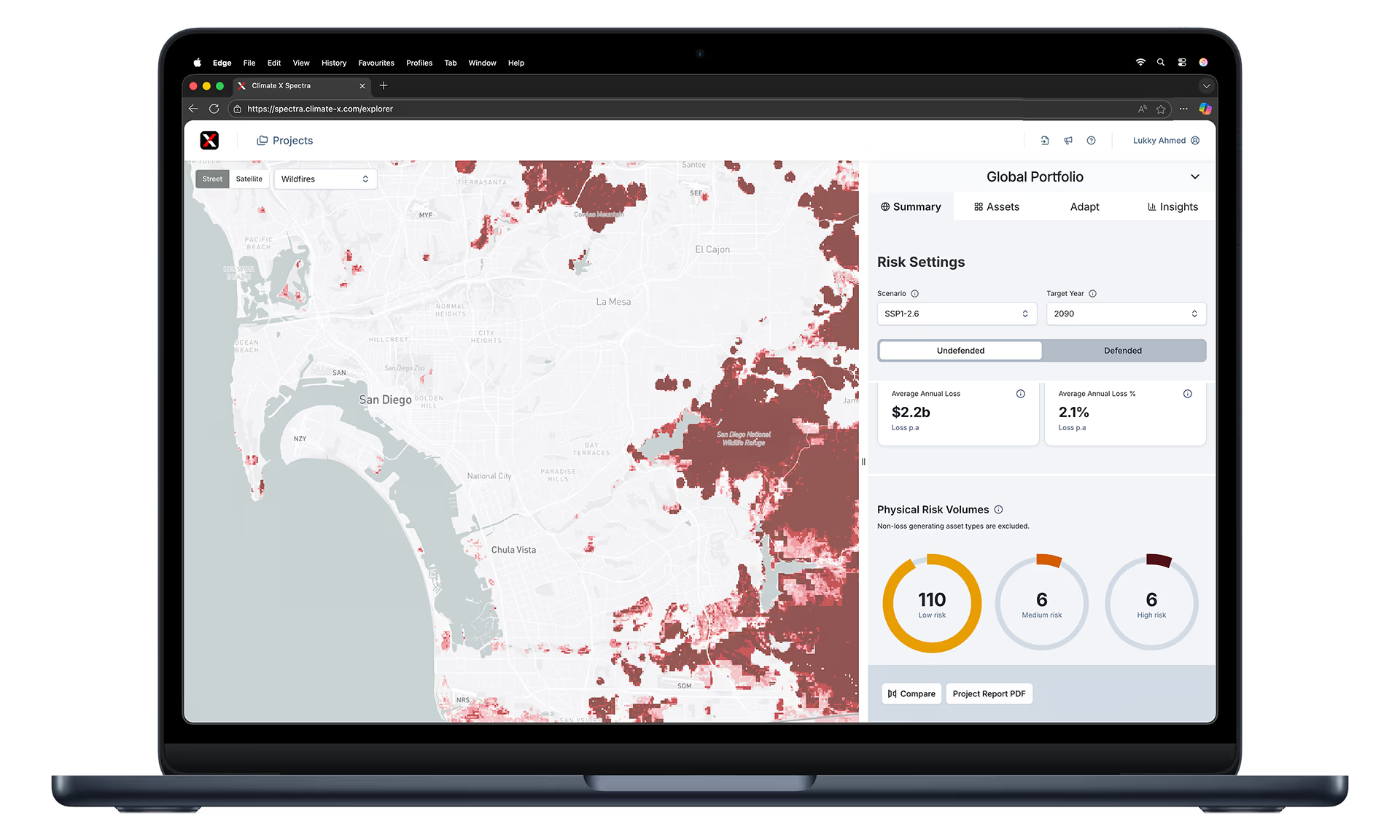
Spectra assesses whether a climate hazard is likely to occur over a given holding period, and how material its impact would be, covering both direct asset damage (replacement cost and average annual loss) and indirect operational disruption (network down days and % revenue impact), helping teams distinguish exposed assets from risks that actually matter.
Adapt
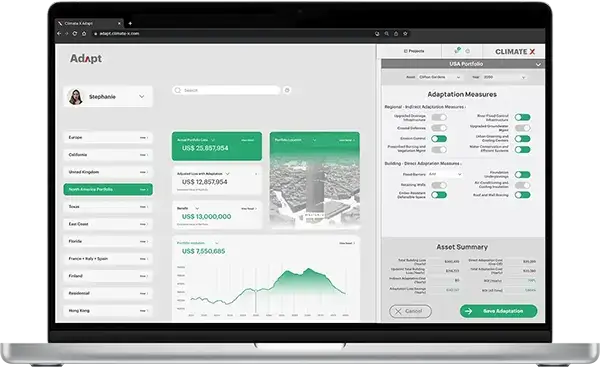
Adapt turns quantified risk into resilience investment decisions, recommending costed adaptation measures for exposed assets and comparing pre- vs post-adaptation losses to calculate expected avoided loss, savings and ROI, helping teams prioritize CapEx that protects revenue and strengthens the investment case.
Operational disruption: common questions answered.
What is operational disruption risk?
Operational disruption is disruption across the systems a business depends on to run, such as people, access and logistics, utilities, assets, suppliers, and customer contracts. It can often produce a larger financial impact than direct asset damage from extreme weather alone.
How can investment teams measure operational risk from extreme weather?
Teams across equity or real assets can begin by mapping the operating footprint of a chosen company, assessing hazard severity and materiality, then translating exposure into disruption days and projected revenue, EBITDA or NOI impact. This turns a qualitative hazard flag into a number that teams can act on — the basis of Climate X's 5-step risk management framework.
What is the best approach to physical climate risk management for private equity and asset management?
The most effective risk management against physical risk for PE teams follows five steps: identify exposure, assess materiality, translate into financial impact, prioritize action, and evidence progress. Applying this consistently moves climate risk from a standalone ESG check into a standard part of diligence, financing and value creation.
How can firms mitigate operational risk from extreme weather?
Risk mitigation starts with mapping exposure across an operating footprint, then prioritizing resilience measures — such as site hardening or supplier diversification — by materiality, cost, and expected adaptation ROI. Progress should be recorded to support IC memos, lender conversations, and exit readiness.
What does risk monitoring look like for PE teams?
Risk monitoring should run continuously: screening exposure at sourcing, translating it into financial sensitivity at diligence, and tracking resilience CapEx and avoided loss through to exit. For credit teams, operating risk may affect lending terms.
What is climate risk management for a real asset portfolio?
Climate risk management for a real asset portfolio means treating physical hazard exposure as a financial variable across the full deal lifecycle — sourcing, diligence, financing, and exit, rather than a standalone ESG disclosure, tying it directly to EBITDA and exit value.