Extreme heat days in central Europe could triple by 2050. Climate X extreme heat data maps where European heat risk rises fastest to mid-century.

Our latest News & Articles
Thought leadership by Climate X


Climate X analysis shows how wildfire risk is changing unevenly across the UK and where the biggest vulnerabilities lie.
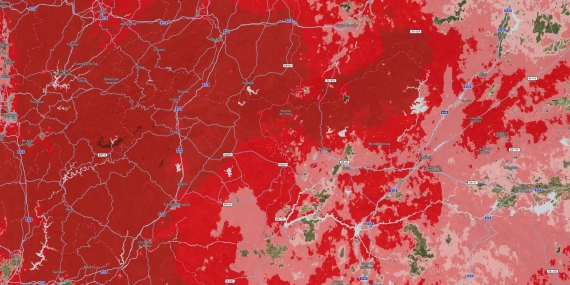
Climate X scientists and engineers explain why wildfire is so difficult to model, and what financial institutions should consider when assessing risk across underwriting, insurance renewal, credit and investment decisions.

Dr James Brennan explains why conventional climate risk models struggle to capture the abrupt, non-linear nature of global climate tipping points and why a narrative approach is a better alternative for financial institutions.

In this conversation with Orbis Advisory and CIP Fund Solutions, we unpack why hazard-only screening underdelivers, how to avoid false precision, and what to look for from risk data vendors.

For real estate owners and investors: a high-level look at what BREEAM measures, how certification works, and why evidence quality matters for comparability across assets.

We benchmarked six architectures for real-time physical climate risk calculations at 30-metre resolution. Here's what works.

A finance-grade guide to CMIP7 scenarios, why the RCP8.5 "worst case" is retiring, and how to keep physical risk, model governance, and resilience planning defensible under uncertainty.

A climate regulations and frameworks guide that breaks down what's changing, what's becoming standard, and what strong disclosure looks like in practice.

27 billion-dollar weather disasters in 2024. $182.7B in damages. Over $1.5 trillion in hurricane losses since 1980. Much of the infrastructure still is not mapped for physical risk.

Direct-damage-only models miss 6–14× of true financial exposure. PRA and ECB are now enforcing. Here's what the next generation of physical risk models looks like.

Turn climate signals into decision-ready insights that improve credit outcomes, support adaptation investment, and strengthen long-term portfolio resilience.

Embed adaptation and resilience into core banking decisions by translating physical risk signals into financial impacts, then into smarter underwriting, pricing, and portfolio action.

