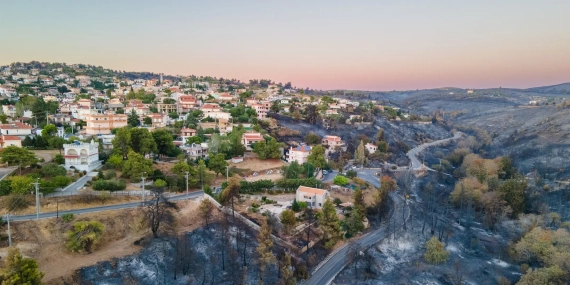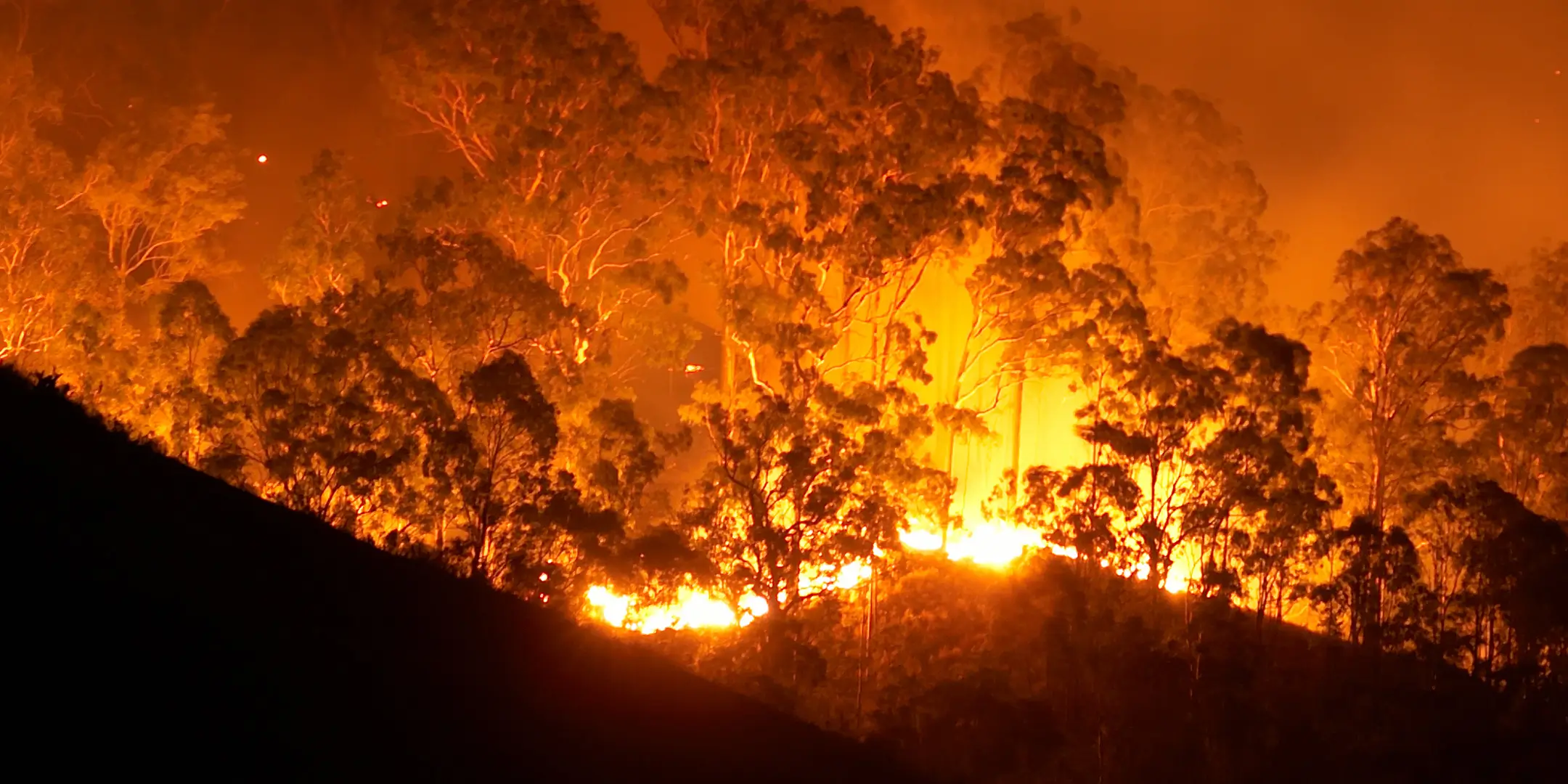
The model goes beyond index-based and purely historical approaches, building on established science to deliver the first consistent, globally applicable view of wildfire risk.
- Global Wildfire gives banks, asset managers, and insurers the precision data they need to map and quantify exposure, as global losses hit record highs
- Financial institutions now have asset-level loss estimates across eight regions, providing a globally defensible view of wildfire exposure
LONDON & NEW YORK CITY: July 22, 2026 – Climate X, the award-winning leader in climate resilience analytics, today unveils Global Wildfire, a global, probabilistic wildfire model built for asset-level risk decisions.
As wildfires become more frequent and more destructive, with SwissRE putting 2025 losses at $40bn, wildfire models are struggling to pinpoint risk accurately. Global Wildfire gives insurers, asset managers, and governments the precision data they need to quantify exposure and make informed strategic decisions.
"Wildfires are a major risk management problem,” said Lukky Ahmed, Co-founder and CEO of Climate X. “For the first time, using Global Wildfire, Institutions have defensible, globally consistent, location-level analytics that translate hazard into potential loss.”

For the first time, using Global Wildfire, Institutions have defensible, globally consistent, location-level analytics that translate hazard into potential loss."
Lukky Ahmed, CEO & Co-Founder at Climate X
 Lukky Ahmed, CEO & Co-Founder at Climate X
The model goes beyond index-based and purely historical approaches, building on established science to deliver the first consistent, globally applicable view of wildfire risk, resolved to 30m (98ft) outputs. Global Wildfire delivers asset-level granularity and financial loss metrics, factoring in landscape and building characteristics, so clients can accurately quantify wildfire impact in commercial terms. The model also supports scenario analysis to 2100 across multiple climate pathways, helping institutions assess how wildfire risk may evolve.
By combining machine learning, stochastic simulation, physical fire-spread modelling, and asset-level loss modelling, Global Wildfire gives financial institutions a consistent way to assess wildfire exposure across global portfolios and climate scenarios.
"Global Wildfire is a significant step beyond index-led or purely historical approaches to wildfire risk,” added Ahmed. “We're giving clients a way to move from hazard insight to real financial risk quantification leading to a more transparent, scientifically robust view that underwriting, credit risk and regulatory scenario analysis all demand."
Global Coverage
Climate X's model covers 93% of global GDP, across 8 regions, enabling cross-region portfolio comparison. Many wildfire models are strong in specific geographies, especially the US, Australia, or other data-rich markets, but financial institutions often hold assets, loans, supply chains, or insured exposures across multiple regions, in areas where high quality wildfire modelling have been missing historically. Risk committees cannot rely on different evidential standards for different markets.
Probabilistic burn probability
The model produces absolute probabilistic burn probability, not just a relative risk index or qualitative score. For regulated financial institutions probabilities and uncertainty ranges can feed directly into due diligence for investments, portfolio analytics, stress testing, risk governance and financial modelling.
Process-based ignition and spread simulation
The model combines advanced machine learning techniques and computationally demanding physical spread simulation to learn both the local landscape fire susceptibility and then simulate fire risk for every location. Machine learning techniques are trained with the latest satellite data to understand the local landscape fire susceptibility and ignition locations determined by terrain, fuel characteristics and the role of humans within the wildland-urban interface. A physical spread model using cellular automata methods then simulates thousands of possible fires for every locale, which vary in ignition location, size and spread direction.
About Climate X
Climate X is one of the world’s leading climate adaptation and resilience firms, empowering financial institutions and real estate owners to turn climate risk into resilient returns. From London to New York, their team of climate scientists and financial risk experts delivers decision-ready intelligence with absolute clarity, quantifying exposure, translating it into financial impact, and mapping the path to ROI for resilience.
Trusted by institutions managing over $13.5 trillion in assets, including a top-3 North American bank, a global top-3 private equity firm, a top-3 Global P&C insurer and leading global consultancies like Deloitte and Bain & Company, Climate X is setting the global benchmark for how organizations de-risk the future and unlock climate-aligned growth. To learn more, visit https://www.climate-x.com.
Explore the Model
Wildfire risk data is critical for pricing exposure accurately and making informed investment, underwriting, and portfolio decisions.
You can estimate asset-specific burn probability and financial loss from wildfire with Global Wildfire, the process-based hazard model built into Spectra, Climate X's climate risk platform. Outputs run across SSP climate scenarios to 2100, giving a consistent basis for stress testing, credit review, and acquisition screening.
Latest Articles & News
A selection of some of our latest articles covering industry, policy and climate science - written by us.